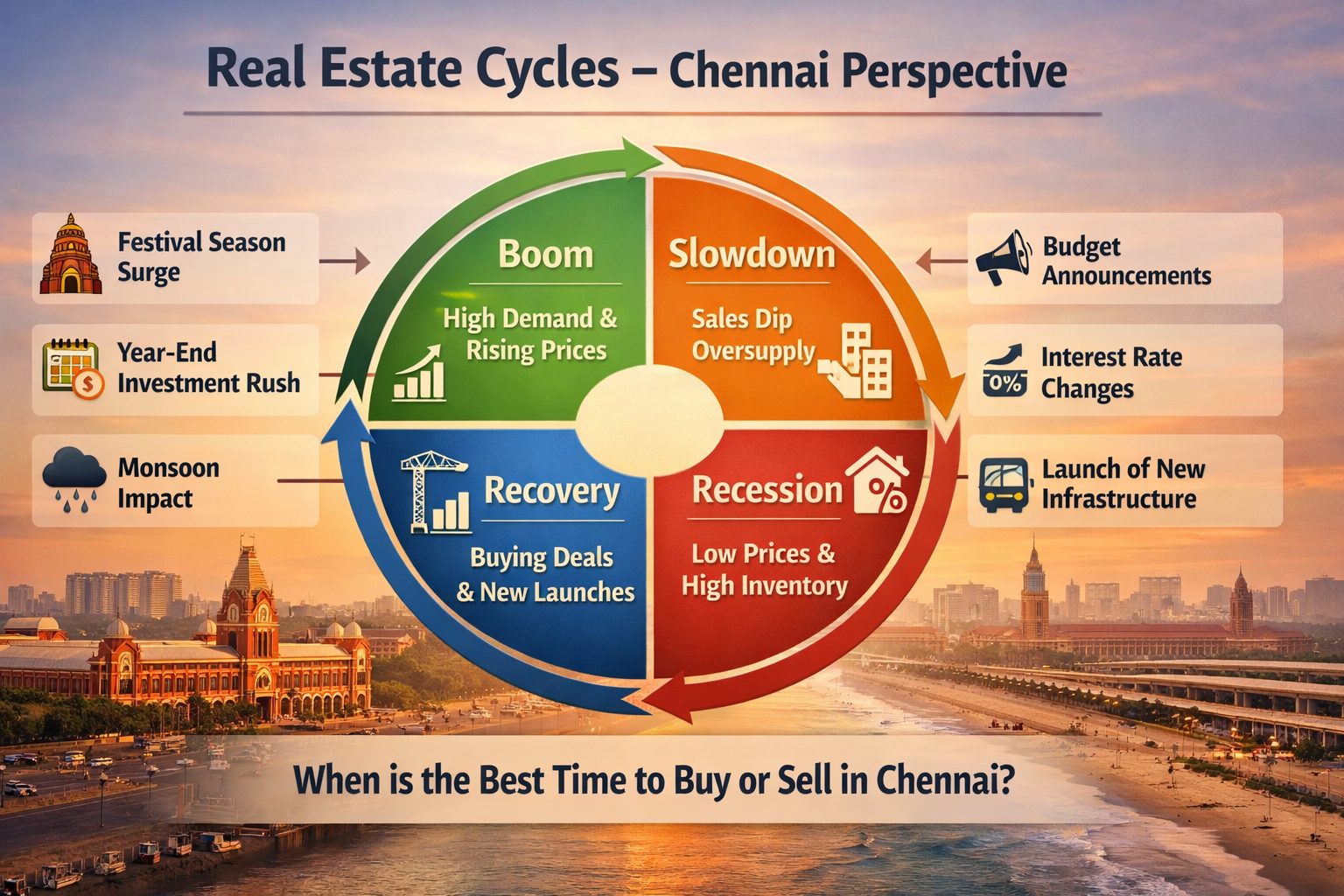
Real estate cycles in Chennai move slowly, predictably, and with strong downside protection. This is because Chennai is not driven by speculative investors but by salary-backed end users from IT, manufacturing, healthcare, and government sectors.
Why Chennai’s Real Estate Cycle Is Different
Most Indian metros see sharp booms and deep corrections. Chennai does not.
Reasons:
- Conservative buyer mindset
- High self-occupation ratio
- Strong preference for long-term holding
- Limited investor flipping culture
This creates flat phases instead of crashes and steady appreciation instead of price bubbles.
Boom Phase – Chennai Style (Controlled Growth)
What it really looks like in Chennai
- Price increases of 5–8% annually, not 20–30%
- Faster bookings, but not bidding wars
- Developers reduce discounts quietly
- Premium for vastu, floor level, and orientation
Local Chennai triggers
- Metro Phase announcements
- IT leasing absorption along OMR
- Reduction in home loan interest rates
- High NRI activity during Dec–Mar
Ground reality example
Even during a boom, Chennai buyers:
- Compare multiple projects
- Negotiate aggressively
- Avoid overleveraging
Key Insight:
Chennai’s boom phase rewards patience, not speculation.
Slowdown Phase – Buyer Confidence Test
What changes on ground
- Enquiries continue, but conversions slow
- Inventory builds up in certain corridors
- Developers extend payment plans
- Ready-to-move demand stays stable
Chennai-specific slowdown causes
- RBI rate hikes
- IT hiring freezes
- Election-related uncertainty
- Oversupply in peripheral locations
Buyer psychology
- Buyers wait for “one more offer”
- Shift focus to reputed builders
- Prefer completed projects
Key Insight:
In Chennai, slowdown ≠ crisis. It is a price discovery phase.
Recession Phase – Silent Opportunity Zone
What happens in Chennai recessions
- Prices stagnate instead of falling
- Distress sales are limited
- Developers stop new launches
- Cash buyers get maximum leverage
Why prices don’t crash
- Owners do not sell below purchase price
- Strong rental fallback
- Cultural resistance to distress selling
Smart buyer advantage
- Negotiation power on base price
- Waivers on registration & interiors
- Better unit selection
Key Insight:
Chennai recession phases create wealth silently for disciplined buyers.
Recovery Phase – Early Movers Win
Early recovery signals in Chennai
- Metro work nearing completion
- Increase in site visits
- Rental demand improving
- Developers announce limited new launches
Market behavior
- Prices stop falling
- Discounts reduce gradually
- Inventory starts moving
Buyer strategy
- Lock in before sentiment shifts
- Focus on infrastructure-ready zones
- Avoid overextended outskirts
Key Insight:
Buying during early recovery gives best risk-adjusted returns.
Chennai-Specific Cycle Influencers (Often Ignored)
1. Monsoon & Flood Memory
- Short-term impact on demand
- Long-term preference for elevated, planned layouts
- Water resilience now influences pricing
2. Cultural Buying Calendar
- Sales peak: Aug–Jan
- Developers time launches around festivals
- Year-end financial planning drives purchases
3. Micro-Market Cycles
- Chennai does not move as one city.
- OMR may boom while West Chennai stagnates
- Infrastructure decides cycle speed
How Long Is One Chennai Real Estate Cycle?
- Average cycle length: 6–8 years
- Flat/stagnant phase: 2–3 years
- Appreciation phase: Gradual, long-term
This makes Chennai ideal for:
- Long-term investors
- End-users planning wealth preservation
Mistakes Buyers Make in Chennai Cycles
- Waiting for price crashes
- Chasing hype locations
- Ignoring infrastructure timelines
- Buying too far from employment hubs